


Services
Receive satellite TV channels without installing a satellite dish
Hosted DVB-S2X tuners in our Tier III data centers in Vilnius and London, delivered over the internet using the standard SAT>IP protocol. Connects to TVHeadend, Cesbo Astra, VLC, Kodi, and any other SAT>IP-compatible client your IPTV stack already uses.
Three reasons operators move satellite reception off-site
Traditional satellite reception requires hardware, installation, and ongoing maintenance. Here’s why more operators are replacing on-site infrastructure with hosted SAT>IP.
1
Broadcast satellite TV without owning a dish
IPTV operators, hospitality integrators, monitoring agencies, and small broadcasters all need live satellite reception to run their workflows. The
legacy way to get it means owning the entire reception chain: a satellite
dish, the LNB, a multiswitch, a PCIe DVB tuner card, a server, and an RF-cabled rack.
That stack costs thousands up front. It takes weeks to install, demands
roof access, and locks you into a single physical location. Satline
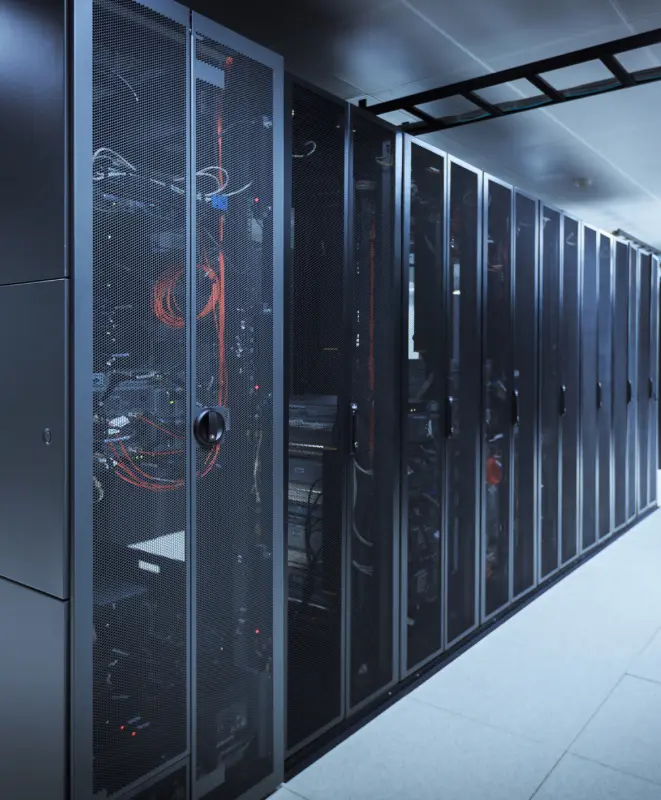
removes the entire stack. We operate dishes, LNBs, and DVB-S2X tuners
in our Tier III data centers in Vilnius and London. You connect to them
over the internet using the standard SAT>IP protocol, the same way
your stack would connect to a SAT>IP server sitting in your server room.

2
Reach satellites your location cannot see
Geography limits satellite reception. A dish in London cannot see Express AMU1 at 36°E without a 1.8m antenna and clear line of sight to a low elevation angle. A dish in Madrid cannot see Express 80 at 80°E at all. Our Vilnius dish farm provides reception of fifteen satellite orbital positions, from Express 80 at 80°E in the east to Intelsat 35e at 34.5°W in the west, plus terrestrial DVB-T from Vilnius Telecentras.
That range includes positions Western European teleports cannot reach: ABS 2 at 75°E, G-Sat 20 at 68°E, and the full Express 80 arc. Our London site adds local reception for Astra 2 at 28.2°E and Eutelsat 5 West B at 5°W, with Layer 2 connectivity between the two sites so a single contract gets you both footprints. If your channel sits on any satellite on our coverage list, we deliver it to you over IP.

3
Generic cloud hosting does not solve this. SAT>IP-native hosting does
Generic cloud providers can host an IPTV server, but they cannot give
you a satellite feed. Pulling streams through a restreaming chain
instead of receiving satellite directly typically adds 5 to 30 seconds
of latency and introduces failure points under load. Satline is built
specifically for the satellite-to-IP layer.
We run our own dishes (the ST-2700H, ST-1800H, and ST-3700H models,
all with integrated electrical heating for winter reception), monitor them
24/7, and expose them as a fully compliant SAT>IP endpoint that
any SAT>IP-compliant client can connect to. The protocol your stack
already speaks. The integration is the configuration step you already know
how to do.

4
The result: a hosted satellite tuner that drops into the stack you already run
You order a tuner. You receive a hostname and credentials. You install
TVHeadend, Cesbo Astra, VLC, Kodi, or any of the other compatible
clients listed below. Your IPTV pipeline now has live satellite reception.
No dish on your roof. No PCIe card in a server. No RF chain to maintain.
Reception happens in a Tier III data center with N+1 power, redundant
cooling, and 24/7 monitoring. The signal travels to you over the public
internet using TCP-interleaved RTSP, the WAN-friendly transport that
survives firewalls and NAT without TCP tweaks. Same workflow your
engineers already know, minus the hardware they no longer have to
maintain.

Properties
How do SAT>IP tuners work?
Basic operating principles of SAT>IP tuners.
Understanding SAT>IP technology
SAT>IP technology innovatively transforms traditional satellite signals into Internet Protocol (IP) packets, enabling seamless distribution and reception of satellite content over IP networks. With SAT>IP, users can effortlessly access a wide range of satellite broadcasts from any device connected to the VPS, eliminating the need for additional satellite reception equipment and providing an uncluttered, efficient experience.
Shared SAT>IP Virtual Tuner
This service provides virtual access to a shared DVB tuner, assigned to a specific satellite and frequency. Choose from a pool of shared SAT>IP virtual tuners providing access to your preferred satellites and frequencies.
Promotion
Virtual SAT>IP Servers
Choose your ideal configuration, now available at a special rate.
Locked tuners
Shared tuners locked to the frequencies you select.
Unlocked tuners
Select a whole satellite position.
A SAT>IP endpoint with everything around it
Every Virtual SAT>IP plan includes the dish, the LNB, the DVB-S2X tuner, the network, the data center, and the SAT>IP control protocol. Below is the technical reality behind each layer, in the same language your engineers use.
Full DVB-S, DVB-S2, and DVB-S2X reception with 256-APSK
DVB-S2X multistream (ISI and PLSC)
Native T2-MI decapsulation
SAT>IP Protocol Specification v1.2.2
HTTP control with RTP transport
Three steps from order to live stream
Choose your configuration
Configure your client
Stream
Our operations
Three operations Satline was built for
Different operators come to Satline for different reasons. Below are the three setups we see most often, with the specific configuration and use case behind each one.
Cesbo Astra and TVHeadend integrators adding satellite positions to existing IPTV operations
A small or mid-size IPTV operator already running Cesbo Astra or TVHeadend, with an existing on-site DVB tuner card (typically a TBS or Digital Devices PCIe card), needs to add a satellite position their current dish cannot reach. Buying a second dish for that one position is often impractical (roof access, planning permission, ongoing maintenance). With Satline, they add the Satline server to their existing Astra or TVHeadend instance by using the Virtual-SAT>IP adapter (Astra) or by adding the SAT>IP server manually in TVHeadend’s configuration. The Satline tuner appears in their existing UI as another DVB device. They mix Satline-hosted reception and on-site PCIe tuners in the same headend, configured through the same software they already use. Working configurations for both Astra and TVHeadend are in the Satline knowledge base.
Diaspora and ethnic IPTV operators sourcing content from satellites their region cannot reach
An IPTV operator delivering Russian-language, Turkish, Ukrainian, Arabic, or other ethnic-market content to subscribers in Europe, North America, or elsewhere needs satellite reception of feeds from positions that are difficult or impossible to receive from their region. From Western Europe, Express AMU1 at 36°E is reachable only with a 1.2m+ dish and clear sightlines; Express 80 at 80°E is unreachable. Our Vilnius location sits at the eastern edge of the EU, which gives us line of sight to satellites that Madrid, Paris, or London-based teleports cannot easily reach. Our coverage list includes Express 80 at 80°E, ABS 2 at 75°E, G-Sat 20 at 68°E, Express AMU1 at 36°E, Angosat 2 at 23°E, and others, all delivered to the customer over IP regardless of where they sit.
Operators in locations where dish installation is restricted or impractical
Some sites simply cannot host a satellite dish. Heritage and listed buildings carry external installation restrictions in many European jurisdictions. Urban data centers, hospital campuses, regulated rooftops, multi-tenant office buildings, and HOA-governed properties impose physical and legal barriers to dish installation. Mobile and pop-up broadcast setups need feeds without the time and capex to set up a temporary dish. In all of these cases, the Satline model works because no dish goes up at the customer site. Reception happens entirely in our data centers; the channels arrive at the customer site as IP traffic over standard internet connectivity.

Have questions?
Talk to one of our engineers to learn more about what we offer and how it fits your needs.
Testimonials
What our clients say
Recommend providers
“Good support, stable satellite server. You should buy a server from this provider!”
Satline offers a lot of highly…
“Satline offers a lot of highly configurable and customizable services. They were able to build me a dedicated DVB server that had exactly what I needed, and had the performance required. I am also satisfied with the tech support. They are fast to answer my questions. No issues!”
I found the team to be very smart and…
“I found the team to be very smart and resourceful. They helped me configure my servers and tuners, much faster than if I did everything myself. They also gave me some ideas to save money on my equipment.”
FAQ
Eleven questions buyers ask before they order
What software is compatible with your virtual SAT>IP tuners?
Compatible software includes TVHeadend, Cesbo Astra, VLC Media Player, Kodi, Mumudvb, GStreamer, Me TV, Kaffeine, MythTV, and VDR.
What is a virtual SAT>IP tuner?
A Virtual SAT>IP tuner converts satellite TV signals into IP packets, allowing the content to be streamed over an IP network and accessed by compatible clients.
What satellite positions do you have?
- 0.8°W - Thor 5/6/7 & Intelsat 10-02
- 4.0°W - Amos 3/7
- 4.9°E - Astra 4A & SES 5
- 9.0°E - Eutelsat 9B & Ka-Sat 9A
- 13.0°E - Hotbird 13F/13G
- 16.0°E - Eutelsat 16A
- 19.2°E - Astra 1KR/1L/1M/1N
- 21.5°E - Eutelsat 21B
- 23.5°E - Astra 3B/3C
- 28.3°E - Astra 2E/2F/2G
- 30.0°W - Hispasat 30W-5/30W-6
- 36.0°E - Eutelsat 36B & Express AMU1
- 75.0°E - ABS 2/2A
- 80.0°E - Express 80.