


Choosing the Right SAT>IP Server in 2026
- Created: 2026-04-02 15:17
- Updated: 2026-04-02 15:19
SAT>IP is a DVB standard (EN 50585) that converts DVB-S/S2 satellite signals into IP streams, allowing live TV to be distributed across standard Ethernet networks instead of requiring a satellite receiver at each endpoint.
The correct SAT>IP server depends on deployment type – home installations, MDUs, hotels, broadcast redistribution, or IPTV headends all have different scaling requirements. Tuner architecture, multicast capability, CI/CAM support, RF inputs, and network design determine how well a system performs under load.
This guide targets system integrators, hospitality operators, IPTV engineers, and technically inclined users. All specifications referenced are verified against manufacturer documentation and relevant protocol standards.
Key decision factors include tuner capacity vs concurrent streams, multicast vs unicast delivery, CI/CAM requirements for encrypted services, and whether the platform is a hardware appliance or virtual infrastructure.
Correct sizing at the SAT>IP layer prevents tuner contention, bandwidth waste, and client compatibility issues.
How This List Was Created
This list focuses on SAT>IP servers with clearly documented specifications and deployment relevance. Products were evaluated using manufacturer datasheets, official manuals, and DVB protocol documentation.
The comparison prioritizes factors that directly affect real-world deployments:
- Documented tuner capacity and how many independent transponders can be locked simultaneously
- Multicast and unicast support, which determines scalability in MDUs, hotels, and IPTV redistribution
- RF input architecture and compatibility with satellite distribution standards where applicable
- CI/CAM availability for environments distributing encrypted DVB services
- Deployment model (compact appliance, rack headend, or infrastructure-based solution)
Where specifications are not publicly documented by the manufacturer, they are treated as unspecified rather than inferred.
The goal is to provide deployment-oriented guidance based on verifiable technical information rather than marketing claims.
What Is SAT>IP and How It Works
SAT>IP distributes DVB broadcast services over IP networks while preserving the original DVB transport stream. A SAT>IP server receives DVB-S/S2 signals through RF inputs and exposes them as IP streams that compatible clients request over the network.
SAT>IP itself delivers native DVB transport streams. In SATLINE satip-server-pro deployments, streams can be piped directly as SRT (alongside HTTP/RTSP) for immediate contribution, or repackaged downstream into HLS/DASH workflows—making it a strong source layer for CDN ingest and origin pipelines.
SAT>IP Protocol Stack
SAT>IP uses separate control and transport layers:
- Control – RTSP / HTTP: Clients request a specific DVB transponder and service. Each request consumes one tuner capable of locking to a single transponder.
- Transport – MPEG-TS over RTP (SAT>IP baseline) plus implementation-specific SRT: Deployments typically use RTP/UDP in LAN environments, while SATLINE hosted workflows use RTP-over-RTSP (TCP interleaved / HTTP-TCP style delivery) and can also expose native libsrt outputs for direct secure contribution.
Implications include predictable DVB bitrate streams; UDP paths favor minimal latency, while TCP-interleaved paths favor delivery integrity and firewall/NAT compatibility.
Unicast vs Multicast
- Unicast: One stream per client. Common in home installations.
- Multicast: One stream shared across multiple clients. Recommended for MDUs, hotels, and large deployments.
Multicast significantly reduces bandwidth usage but requires multicast-capable network infrastructure.
Network Discovery and Requirements
Many consumer SAT>IP devices use UPnP/SSDP for discovery, but SATLINE virtual tuners are provisioned with manual endpoint configuration (SSDP disabled for security and access control). In hotel/campus LAN multicast designs, managed switches still need IGMP snooping and, in larger networks, an IGMP querier.
When SSDP discovery is disabled, clients are configured directly by hostname/IP and SAT>IP descriptor endpoints instead of relying on browser auto-discovery.
What SAT>IP Is Not
SAT>IP is frequently misunderstood:
- It is not, by itself, a complete OTT packaging stack, though SAT>IP ingest is frequently transcoded/repackaged downstream into HLS, DASH, and CDN delivery pipelines; SATLINE satip-server-pro additionally supports native direct SRT output for contribution workflows.
- It does not define CI/CAM behavior, which varies by implementation.
- Tuners are not equal to users – each tuner locks to one transponder, though multiple services on that transponder can be shared.
Understanding these fundamentals helps prevent common deployment and sizing mistakes.
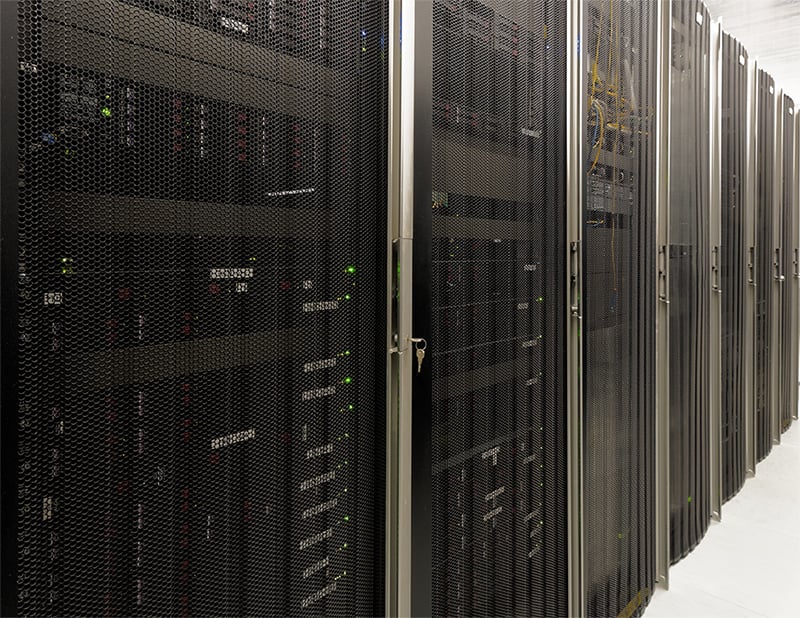
How to Choose a SAT>IP Server
Choosing a SAT>IP server is primarily an infrastructure decision. The system must match tuner scale, network design, and whether encrypted channels need to be handled.
Tuner Capacity vs Concurrent Users
A tuner locks to a single DVB-S/S2 transponder. Multiple services on that transponder can share a tuner, but services on different frequencies require additional tuners.
Key implications:
- “8 users” does not necessarily mean 8 independent channels.
- Once all tuners are allocated, additional requests cannot be served.
- Sizing should consider transponder diversity during peak viewing, not just viewer count.
Typical sizing:
- Home: 2–4 tuners
- Small MDU: 4–8 tuners
- Hotels / hospitality: higher tuner counts to avoid contention
Multicast vs Unicast
- Unicast: One stream per client. Simple and common in home setups.
- Multicast: One shared stream for multiple clients. Much more bandwidth-efficient for hotels and MDUs but requires IGMP-capable network switches.
CI/CAM and Decryption
Some SAT>IP servers include CI slots for decrypting encrypted DVB services.
Important considerations:
- CI behavior is not defined by the SAT>IP specification.
- Client compatibility varies by implementation.
- Decryption should only be used where lawful access exists.
Deployments limited to free-to-air content do not require CI modules.
Hardware vs Virtual Deployment
SAT>IP infrastructure can take several forms:
- Compact appliances – integrated tuners for homes or small networks
- Rack headend systems – higher tuner capacity and multicast distribution for hospitality or broadcast environments
- Virtual / infrastructure-based SAT>IP – hosted environments used by IPTV operators or remote distribution systems
The right architecture depends on tuner scale, network design, and operational requirements.
Best SAT>IP Servers in 2026
Quick Comparison: SAT>IP Servers 2026
| Product | Deployment Type | Tuners / Concurrent Streams | Multicast Support | CI/CAM Support | Best For | Avoid If |
| SATLINE Professional DVB-S2X Tuners | Virtual / Hosted | Plan-based (starts ~8, scalable by contract) | Confirm per plan | Not documented as built-in | IPTV operators needing remote, scalable tuner access | You need on-prem RF control or guaranteed LAN multicast |
| Kathrein EXIP 418 | Hardware Appliance | 8 DVB-S/S2 tuners (8 streams) | Yes (static multicast + unicast) | No | Small to mid-scale installations | You need integrated CI or >8 tuners |
| XORO SAT>IP Server 8100 | Hardware Appliance | Up to 8 streams | Yes (documented) | No | Residential / light commercial | You need CI or enterprise scale |
| Selfsat IP22 | Integrated Antenna + SAT>IP | Up to 8 concurrent streams | Not explicitly documented | No (FTA oriented) | Homes / compact installs | You need CI, modular tuners, or headend scale |
| Digital Devices Octopus NET | Hardware SAT>IP Server | Up to 8 tuners (varies by model) | Yes (MPTS / multicast supported) | Optional (model dependent) | Advanced home, MDU, light hospitality | You need >8 tuners per unit |
| TBS MOI Pro | IPTV / Headend Server Platform | Up to 32 tuners (via PCIe cards) | Software-dependent | Depends on tuner/middleware | Professional IPTV headends | You want plug-and-play SAT>IP appliance |
| BLANKOM SSI-108 | Professional Headend | 2 DVB-S/S2 tuners | Yes (SPTS/MPTS) | Yes (Dual CI) | Small professional headends | You need high tuner density |
| Telestar DIGIBIT R1 | Hardware Appliance | Up to 4 streams | Not explicitly documented | No | Basic home SAT>IP setups | You need >4 streams or CI |
SATLINE Professional DVB-S2X Tuners – Best Hosted SAT>IP Infrastructure
SATLINE provides hosted DVB-S2/S2X tuner infrastructure exposed through SAT>IP access, allowing operators to receive satellite channels without deploying physical RF hardware on-site. Instead of installing satellite receivers locally, clients connect to virtual tuner capacity within Satline’s infrastructure and ingest the streams through their own IPTV workflows.
The main advantage of this model is operational simplicity. By moving satellite reception and tuner management into hosted infrastructure, IPTV operators can scale tuner capacity without installing dishes, RF distribution, or headend equipment. This approach is particularly useful for remote production environments or distributed IPTV platforms where maintaining physical satellite hardware would add operational overhead.
Best suited for
- IPTV operators needing scalable SAT>IP tuner capacity without local satellite infrastructure
- Broadcast or streaming workflows ingesting satellite channels remotely
- Organizations building cloud-based IPTV distribution systems
Less suitable for
- Deployments requiring full on-site RF control and local satellite reception
- Installations needing guaranteed LAN multicast distribution within the same network
- Environments requiring integrated CI/CAM decryption at the hardware layer
Strengths
- No physical satellite hardware required on-site
- Rapid provisioning of additional tuner capacity
- Scalable infrastructure suitable for remote IPTV workflows
Limitations
- Tuner capacity defined by service plans and contracts
- Conditional access handling typically occurs outside the tuner layer
- Network architecture and latency depend on provider infrastructure
Kathrein EXIP 418 – Best 8-Tuner SAT>IP Appliance for Small Deployments
The Kathrein EXIP 418 is a hardware SAT>IP server designed for on-premises installations that need reliable satellite-to-IP conversion without complex headend infrastructure. It provides eight independent DVB-S/S2 tuners, allowing up to eight simultaneous IP streams from satellite transponders while maintaining compatibility with standard LNB and multiswitch setups.
What makes the EXIP 418 notable is its balanced design for small and mid-scale deployments. It supports both dynamic unicast streaming and static multicast distribution, making it suitable for homes, small MDUs, and light hospitality environments where multiple clients need access to satellite channels over IP. Support for Unicable standards EN 50494 and EN 50607 further simplifies installation in modern shared satellite systems.
Best suited for
- Homes and small multi-dwelling units needing reliable SAT>IP distribution
- Installations using standard LNB or Unicable satellite systems
- Small hospitality deployments distributing satellite channels to multiple IP clients
Less suitable for
- Deployments requiring integrated CI/CAM decryption
- Large hospitality or broadcast environments needing more than eight tuners
- Installations requiring modular headend scalability
Strengths
- True 8-tuner hardware architecture
- Supports both unicast and multicast streaming modes
- Compatible with standard and Unicable satellite configurations
- Low power consumption (~9 W) for continuous operation
Limitations
- Fixed 8-tuner capacity with no internal expansion
- No integrated CI/CAM slots for encrypted channels
- Scaling beyond eight tuners requires deploying additional units
XORO SAT>IP Server 8100 – Best Entry-Level SAT>IP Server for Home Networks
The XORO SAT>IP Server 8100 is a compact on-premises SAT>IP appliance designed to convert satellite signals into IP streams for home and small office networks. It supports up to eight simultaneous SAT>IP streams and provides four independent satellite inputs, making it compatible with common LNB configurations such as single, twin, quad, or multiswitch setups.
Its main appeal is simplicity. The device focuses on basic SAT>IP distribution without complex headend features, offering straightforward configuration through a web interface and compatibility with common SAT>IP clients such as smart TVs, media players, and software receivers. For small residential networks that need multiple simultaneous streams without installing multiple receivers, it provides a practical entry-level solution.
Best suited for
- Home networks distributing satellite channels to multiple IP clients
- Small offices or apartments needing up to eight concurrent streams
- Installations requiring a compact, easy-to-configure SAT>IP appliance
Less suitable for
- Deployments requiring integrated CI/CAM decryption
- Hospitality or enterprise environments needing larger tuner pools
- Installations relying on Unicable/SCR satellite distribution
Strengths
- Supports up to 8 simultaneous SAT>IP streams
- Four independent satellite inputs for flexible antenna setups
- Simple web-based configuration interface
- Compatible with a wide range of SAT>IP clients
Limitations
- Maximum of 8 concurrent streams without adding additional servers
- No integrated CI/CAM support for encrypted channels
- Unicable/SCR compatibility not documented and may require standard LNB distribution
The Selfsat IP22 combines a flat satellite antenna with integrated SAT>IP streaming hardware, allowing satellite channels to be received and distributed over an IP network without a separate headend server. The unit includes a built-in Universal Twin LNB and internal SAT>IP encoding, enabling up to eight concurrent streams to compatible clients on the local network.
Selfsat IP22 Flat SAT>IP Antenna – Best Integrated SAT>IP Antenna for Compact Installations
Its main advantage is installation simplicity. By combining satellite reception and IP distribution in a single device, the IP22 eliminates the need for additional tuners or SAT>IP appliances. This makes it well suited for apartments, small homes, or locations where installing a full satellite dish and server infrastructure would be impractical.
Best suited for
- Homes or apartments wanting simple SAT>IP streaming without separate headend hardware
- Free-to-air satellite reception distributed across a local network
- Compact installations where a flat antenna design simplifies mounting
Less suitable for
- Hospitality or MDU environments requiring scalable tuner infrastructure
- Deployments needing CI/CAM decryption for encrypted channels
- Networks requiring advanced multicast optimization or headend control
Strengths
- Integrated satellite antenna and SAT>IP server in one device
- Supports up to 8 concurrent SAT>IP streams to compatible clients
- Simple installation without external multiswitch or headend hardware
- Includes legacy outputs for traditional satellite receivers
Limitations
- Limited to free-to-air reception without external decryption
- Maximum ~8 concurrent streams with no internal expansion
- Documentation does not emphasize enterprise multicast management features
Digital Devices Octopus NET – Best Modular SAT>IP Server for Advanced Home and MDU Deployments
Digital Devices Octopus NET is a hardware SAT>IP server designed for on-premises deployments that need higher flexibility than entry-level appliances. It supports up to eight DVB-S/S2/S2X tuners and can deliver multiple SAT>IP streams over the network using unicast or multicast distribution, making it suitable for more demanding residential or small hospitality installations.
What distinguishes Octopus NET is its modular architecture and satellite distribution flexibility. The platform supports modern satellite standards such as Unicable (EN50494) and JESS / Unicable II (EN50607) and can optionally include CI slots for conditional access workflows, depending on the hardware variant. This combination makes it a common choice for advanced home setups, multi-dwelling units, or small headend environments that need more configuration options than basic SAT>IP appliances.
Best suited for
- Advanced home installations with multiple SAT>IP clients
- Small MDUs or hospitality environments needing flexible tuner infrastructure
- Deployments using Unicable / JESS satellite distribution systems
Less suitable for
- Large hospitality or broadcast headends requiring significantly more than eight tuners
- Deployments expecting CI/CAM decryption to work universally across all SAT>IP clients
- Installations without proper network planning for multicast traffic
Strengths
- Up to 8 DVB-S/S2/S2X tuners with modular configuration options
- Supports both unicast and multicast streaming (MPTS)
- Compatible with SCR / Unicable I and JESS / Unicable II satellite systems
- Integrated Gigabit networking with IPv4/IPv6 support
Limitations
- Maximum independent tuner count typically limited to eight per unit
- CI/CAM support optional and client-dependent for decryption workflows
- Multicast deployments require proper network configuration (e.g., IGMP support)
TBS MOI Pro IPTV Server – Best Scalable DVB Headend Platform
The TBS MOI Pro is a configurable IPTV and DVB streaming server designed for professional headend deployments. Unlike fixed SAT>IP appliances, it functions as a general-purpose streaming platform that accepts PCIe DVB tuner cards and distributes television streams over IP using middleware such as Tvheadend, VDR, or Kylone.
Its primary advantage is scalability. Depending on the installed tuner cards, the MOI Pro can support up to 32 DVB tuners, enabling large numbers of satellite, cable, or terrestrial channels to be ingested and streamed across a network. This makes it suitable for IPTV operators and advanced headend environments where flexibility and expansion are more important than plug-and-play simplicity.
Best suited for
- Professional IPTV headend deployments ingesting multiple DVB sources
- Operators needing scalable tuner capacity beyond typical SAT>IP appliances
- Installations combining satellite, terrestrial, and cable reception in one platform
Less suitable for
- Users seeking a plug-and-play SAT>IP server with integrated tuners
- Small residential installations requiring only a few concurrent streams
- Deployments without technical expertise to configure middleware and tuner hardware
Strengths
- Highly scalable platform supporting up to 32 DVB tuners depending on configuration
- Compatible with DVB-S/S2/S2X, DVB-T/T2, and DVB-C/C2 via PCIe tuner cards
- Supports multiple IP streaming protocols (HTTP, RTP/UDP) through middleware
- Flexible hardware options (Intel or AMD server configurations)
Limitations
- Tuner cards sold separately, so final capabilities depend on configuration
- Requires middleware installation and configuration (not SAT>IP plug-and-play)
- Conditional access workflows depend on selected tuner cards and software stack
BLANKOM SSI-108 Twin SAT Streamer IP – Best Compact SAT>IP Headend With Integrated Decryption
The BLANKOM SSI-108 is a professional SAT-to-IP streaming appliance designed for compact headend environments. It contains two independent DVB-S/S2 tuners capable of receiving two satellite transponders and distributing multiple transport streams across IP networks using RTP/UDP delivery.
What makes the SSI-108 distinctive is its integrated conditional access capability. The unit includes dual CI slots compliant with EN 50221, allowing encrypted DVB channels to be decrypted directly on the device before being streamed to IPTV systems. This makes it suitable for small hospitality headends or specialized broadcast feeds where a compact device with built-in decryption is required.
Best suited for
- Small hotel or community IPTV headends needing integrated decryption
- Broadcast workflows distributing a limited number of satellite feeds over IP
- Installations where a compact professional SAT streamer is preferred over larger headend systems
Less suitable for
- Deployments requiring large tuner pools or high channel concurrency
- Enterprise SAT>IP distribution platforms with many parallel streams
- Simple residential installations where CI decryption and headend features are unnecessary
Strengths
- Integrated dual CI slots for conditional access decryption
- Streams multiple SPTS or MPTS outputs over IP
- Suitable for multicast and unicast IPTV distribution
- Compact hardware suited for small professional headends
Limitations
- Only two tuners, limiting parallel transponder reception
- Configuration complexity compared with consumer SAT>IP appliances
- Advanced multicast deployments may require additional network configuration
Telestar DIGIBIT R1 – Best Basic SAT>IP Server for Small Home Setups
The Telestar DIGIBIT R1 is a compact SAT>IP server designed for simple residential deployments where satellite TV needs to be distributed to multiple devices over a home network. It connects to a satellite dish or multiswitch and allows compatible clients to request channels over IP using standard SAT>IP protocols.
Its main appeal is simplicity. The DIGIBIT R1 focuses on basic SAT>IP distribution for a small number of devices, allowing up to four simultaneous streams without requiring separate receiver boxes. Configuration is handled through a web interface, and the server works with common SAT>IP client software on TVs, PCs, tablets, and mobile devices.
Best suited for
- Homes distributing satellite TV to a few devices over LAN/WLAN
- Users wanting a simple SAT>IP solution without additional headend hardware
- Free-to-air satellite setups with basic streaming needs
Less suitable for
- Deployments needing more than ~4 concurrent streams
- Installations requiring CI/CAM decryption for encrypted channels
- Hospitality, MDU, or enterprise SAT>IP environments
Strengths
- Simple SAT>IP distribution for up to four clients
- Web-based configuration interface
- Compatible with common SAT>IP client applications and devices
Limitations
- Limited to around four simultaneous streams
- No integrated CI/CAM support for encrypted channels
- Multicast capability is not clearly documented
- Older platform with limited scalability for larger deployments
Common SAT>IP Deployment Mistakes
Most SAT>IP issues come from incorrect sizing or network configuration rather than the protocol itself.
Confusing “Users” With “Tuners”
A tuner locks to a single DVB-S/S2 transponder. Multiple channels on the same transponder can share one tuner, but channels on different frequencies require additional tuners.
As a result, “8 users” does not guarantee 8 independent channels. Systems should be sized based on transponder diversity during peak viewing, not total viewers.
Ignoring Multicast Network Configuration
Multicast can significantly reduce bandwidth in hotels and MDUs, but it requires proper network support. Without IGMP snooping and an IGMP querier, multicast traffic may flood the network and cause instability.
Home installations typically use unicast and may not require multicast configuration.
Assuming CI Works With Every Client
CI/CAM handling is not defined by the SAT>IP specification. Even if a server provides CI slots, decrypted streams may not work with every client. Compatibility depends on the server implementation, client software, and middleware used.
Overestimating Small Appliance Scalability
Compact SAT>IP appliances usually have fixed tuner counts and limited expansion. They work well for homes or small installations but are not designed for large hospitality deployments or professional headend environments.
How to Size a SAT>IP Deployment
SAT>IP sizing focuses on tuners, transponders, and network behavior, not CPU capacity like traditional IPTV servers.
Step 1: Estimate Concurrent Streams
Start with peak simultaneous viewing, not total users.
Typical ranges:
- Home: 2–4 streams
- Small MDU: ~4–12 streams
- Hotels: size based on peak occupancy and channel diversity
Step 2: Calculate Required Tuners
Each DVB-S/S2 tuner locks to one transponder.
Multiple channels on the same transponder share a tuner, but different frequencies require additional tuners.
Size systems based on simultaneous transponder usage, not viewer count.
Step 3: Plan Network Bandwidth
SAT>IP carries native MPEG transport streams over RTP; depending on architecture this may run as RTP/UDP (typical LAN), RTP-over-RTSP TCP interleaved (common in WAN-hosted SATLINE workflows), or implementation-specific direct SRT output (supported by SATLINE satip-server-pro).
Typical ranges:
- SD: ~2–5 Mbps
- HD: ~6–15 Mbps
Unicast bandwidth scales with viewers, while multicast sends one stream for many clients but requires IGMP-enabled switches.
Step 4: Determine Decryption Needs
Encrypted channels require CI/CAM capacity.
- One CAM typically decrypts one transponder at a time.
- CI slots must match the number of encrypted transponders accessed simultaneously.
Stable SAT>IP deployments depend on transponder mapping, tuner sizing, network readiness, and CI capacity.
Conclusion: Choosing the Right SAT>IP Solution
There is no universal “best” SAT>IP server – the right choice depends on tuner capacity, network design, and whether encrypted channels must be handled.
- Homes: Compact SAT>IP appliances or integrated antenna solutions are usually sufficient, typically with 4–8 tuners and unicast streaming over a home LAN.
- Small MDUs: Deployments benefit from 8-tuner servers with multicast support and properly configured IGMP switching to avoid tuner contention.
- Hotels and hospitality: SAT>IP should be treated as headend infrastructure, with higher tuner density, multicast planning, and CI capacity where encrypted channels are distributed.
- IPTV operators: Scalable headend platforms or hosted SAT>IP infrastructure often provide better flexibility than fixed appliances.
For organizations that prefer not to maintain on-site satellite hardware, hosted SAT>IP infrastructure, such as SATLINE’s professional DVB-S2X tuner platform, offers an alternative approach, allowing IPTV operators to access scalable tuner capacity without deploying local RF equipment.
Regardless of the deployment model, stable SAT>IP systems are built around the same principles: size infrastructure by transponder diversity, plan multicast behavior at the network level, and verify CI compatibility before deploying encrypted workflows.

FAQ: SAT>IP Servers
What is SAT>IP?
SAT>IP is a DVB-defined standard (EN 50585) that converts DVB-S/S2 satellite signals into IP streams. A SAT>IP server receives satellite signals via RF inputs, and delivers them over Ethernet using RTSP/HTTP control and RTP transport (typically RTP/UDP in LAN deployments or RTP-over-RTSP TCP interleaved in WAN-hosted workflows), allowing compatible clients to access live TV without dedicated satellite receivers at each endpoint. SATLINE satip-server-pro also provides native direct SRT output as an implementation extension for WAN contribution and CDN ingest.
How many tuners do I need?
A tuner locks to one DVB transponder at a time. Multiple services on the same transponder can share a tuner, but channels on different frequencies require additional tuners.
Sizing depends on simultaneous transponder diversity, not total users:
- Home: typically 2–4 tuners
- Small MDU: 4–8 tuners
- Hotel / hospitality: based on peak channel diversity and occupancy
Always size for peak concurrent channel spread.
Does SAT>IP support multicast?
Yes. SAT>IP supports both unicast and multicast delivery. In SATLINE-style architecture, WAN ingest is typically unicast over TCP-interleaved RTP, multicast is primarily used inside managed LAN/headend segments for large-scale viewer distribution, and satip-server-pro can simultaneously provide direct SRT outputs for CDN contribution paths.
- Unicast: one stream per client (common in homes).
- Multicast: one shared stream for multiple clients (recommended in hotels and MDUs).
Multicast requires proper network configuration, including IGMP snooping and, in larger networks, an IGMP querier.
Is CI part of the SAT>IP specification?
No. CI/CAM behavior is not defined by the core SAT>IP protocol.
Some servers include CI slots for decryption, but compatibility depends on server implementation and client software. CI support must be verified per device and deployment scenario.
Can SAT>IP work over Wi-Fi?
Yes, provided the Wi-Fi network can handle the required bandwidth and stability.
HD DVB streams commonly range between ~6–15 Mbps. Multiple simultaneous streams increase aggregate load. On UDP paths, packet loss directly affects playback; TCP-interleaved delivery improves reliability, but stable bandwidth and low jitter are still required.
For stable multi-stream environments, wired Ethernet is preferred.
What clients are compatible with SAT>IP?
SAT>IP-compatible clients include:
- Certain smart TVs with built-in SAT>IP support
- Media players (e.g., VLC with SAT>IP support)
- TVHeadend-based systems
- Kodi integrations
- Dedicated SAT>IP apps on mobile devices
Client compatibility varies by implementation. Always verify SAT>IP version support and CI handling if encrypted services are involved.
What’s the difference between virtual and hardware SAT>IP?
Hardware SAT>IP devices are on-premises appliances connected directly to satellite RF inputs. They are suitable for homes, MDUs, and local headend deployments.
Virtual SAT>IP services provide remote tuner access hosted in managed infrastructure. They eliminate on-site satellite hardware and are often used by IPTV operators or remote streaming environments.
The choice depends on whether you require local RF control or centralized, scalable tuner infrastructure.
Editorial and Compliance Note
This guide is intended for informational and technical evaluation purposes only. It covers SAT>IP infrastructure, tuner capacity, multicast behavior, and deployment considerations based on publicly available manufacturer documentation and relevant protocol standards.
SAT>IP technology enables the distribution of DVB broadcast signals over IP networks. The reception, decryption, redistribution, or rebroadcast of television content may be subject to licensing agreements, contractual restrictions, and local regulations.
If using CI/CAM modules or distributing encrypted channels:
- Ensure you have lawful access to the content.
- Verify that your deployment complies with broadcaster terms and applicable laws.
- Confirm conditional access workflows with both hardware vendors and client software providers.
We evaluate products based on documented technical capabilities and deployment suitability. This article does not provide legal advice and does not endorse unauthorized content redistribution.